“Living in joy, not in endurance — that's what's natural.”
Carried forward →
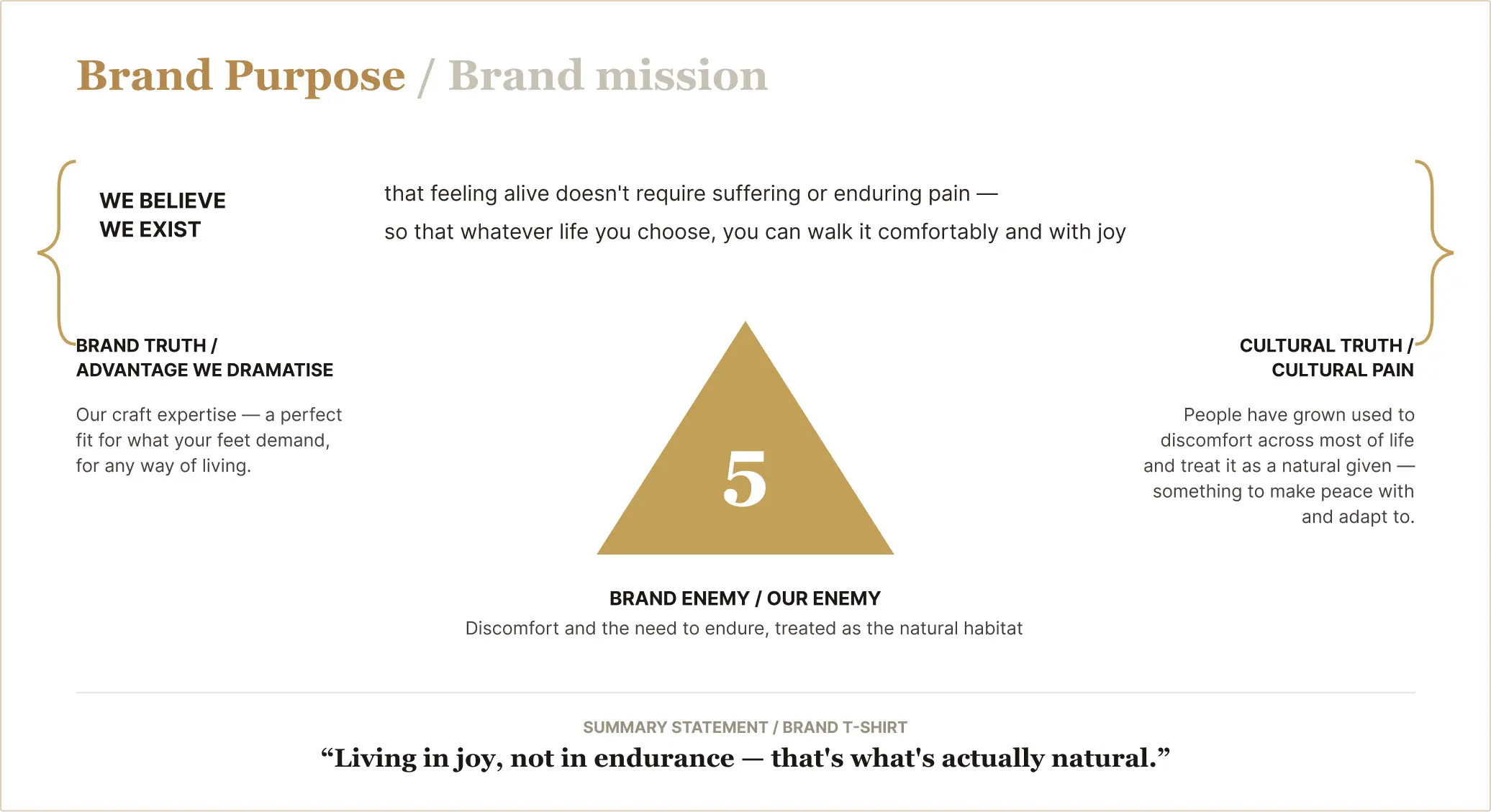
Enemy
Discomfort, normalised as the habitat you must adapt to.
Brand platform and positioning built from the ground up for a footwear brand strong on reason but with no emotional core.
Ecco owns strong rational equity — fit, real leather, “on your feet all day.” A loyal segment buys it precisely for that.
But across its market, Ecco had no formed positioning and no emotional core — only the rational story. So it couldn't grow past that loyal core: a brand people .
Develop Ecco's positioning, mission and emotional territory from the ground up — the brand had none.
The obvious move was to add warmth on top of comfort, the way every shoe brand does. But that was the trap: in a culture that treats comfort as weakness, simply making comfort feel nice doesn't work. The brand needed a reason for comfort to matter — not a softer way to sell it.
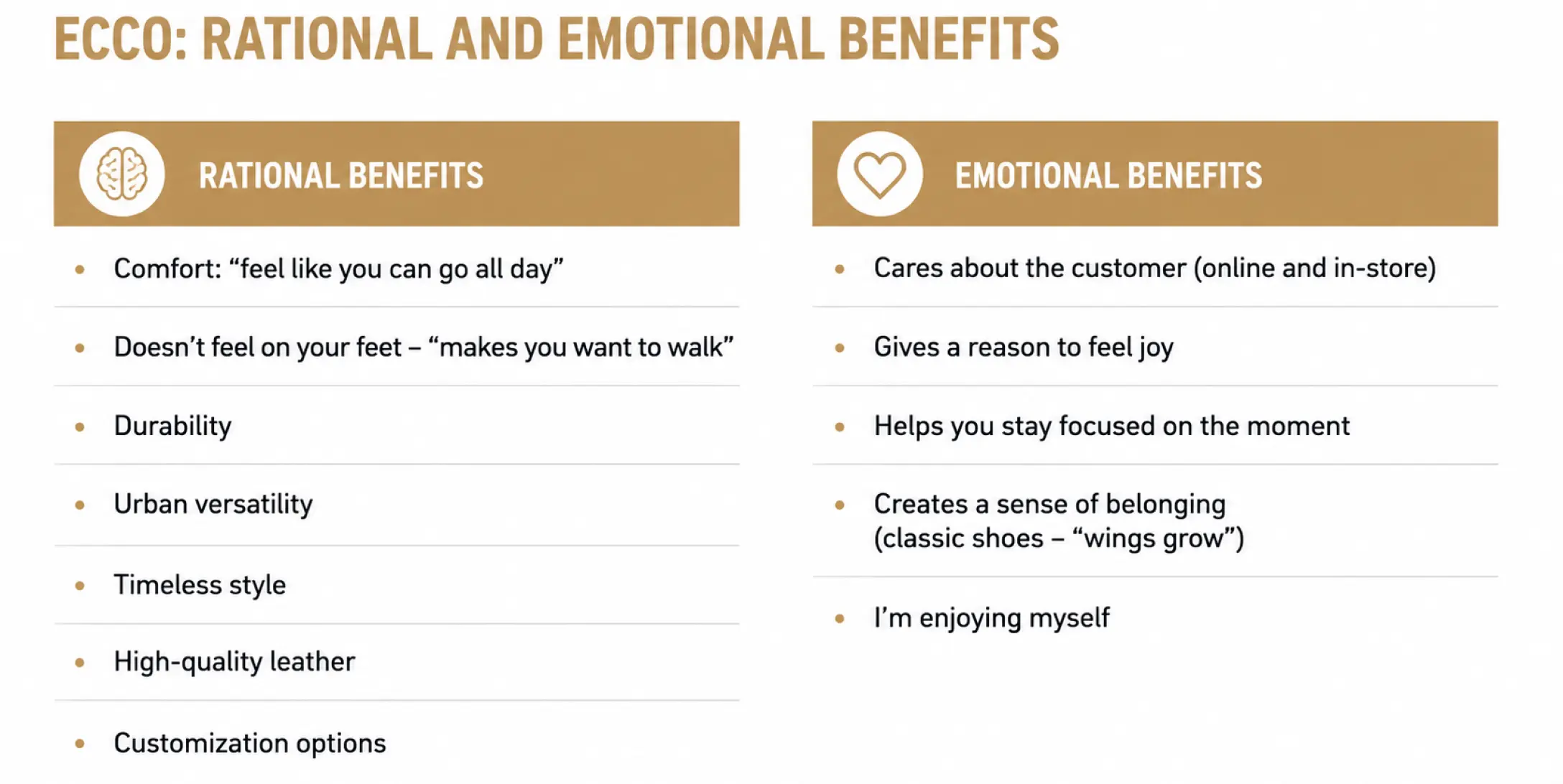
Comfort wasn't a product problem. It was a permission problem.
Achievement culture turned fighting the comfort zone into the price of being taken seriously — and made comfort itself feel like a weakness. That's the cultural pain the platform had to resolve: not a gap in the product, but a permission the audience had stopped giving themselves.
The territory wasn't guessed — it was built. It came out of a two-day cross-functional workshop with Ecco's leadership, marketing and sales teams, run on the Brand Purpose pyramid method. Going in, I'd built the analytical foundation: the category and trend audit, the competitor audit, and a detailed portrait of the strategic audience. The exhibits below are rebuilt from the working decks — translated and de-branded.
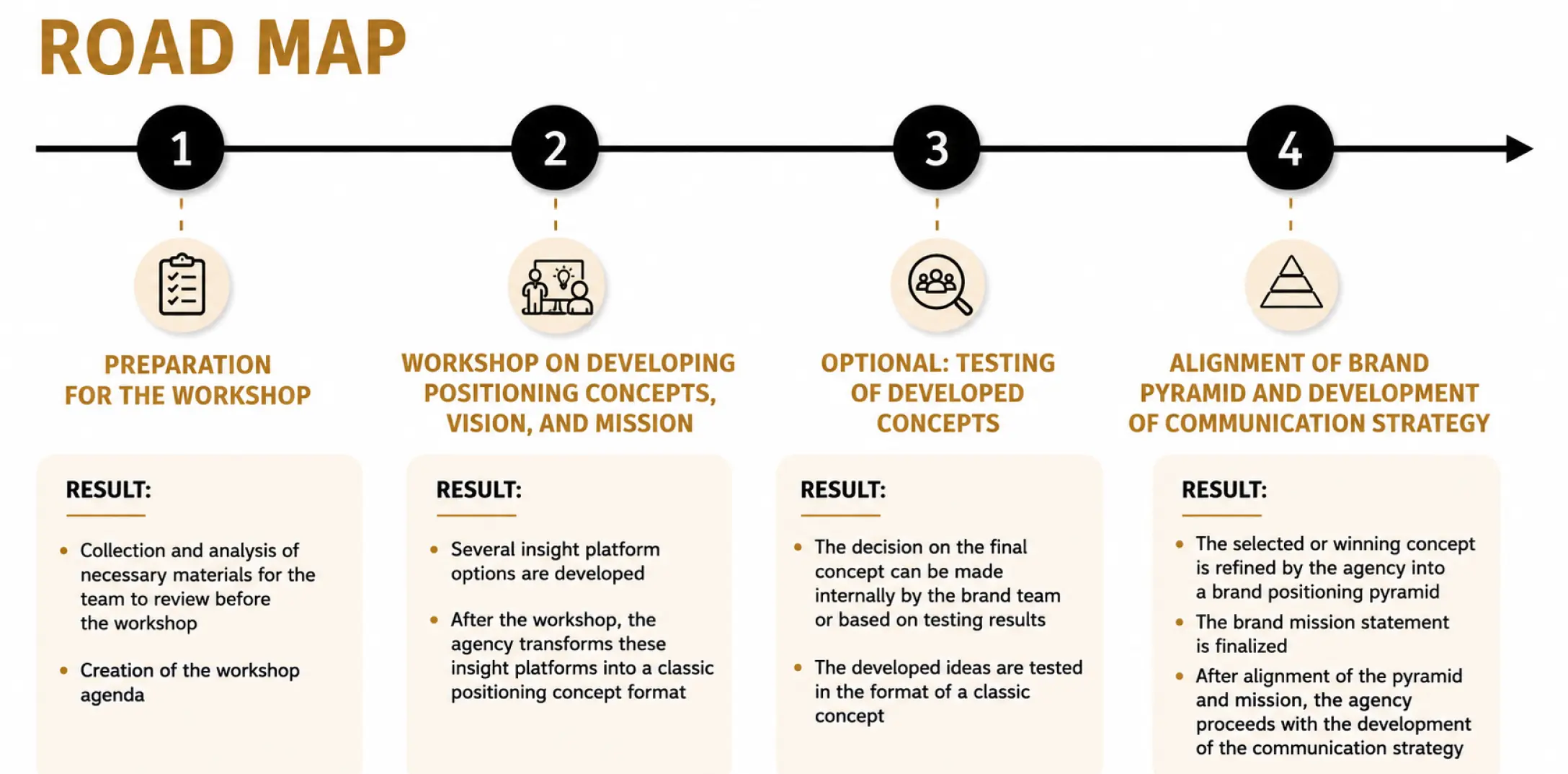
Eleven territories were developed against one shared logic, then clustered into a single map. The strategy resolved to one — the platform carried forward as the recommended direction:
The normalisation of endurance as a habitat — a tension everyone in the audience feels but never names.
The brand's craft expertise is the literal proof that suffering is optional. No competitor can borrow it.
It scales from manifesto to product story to seasonal campaign without thinning out.
The two artefacts below are the recommended territory as it was actually worked — the concept write-up and its Brand Purpose pyramid.
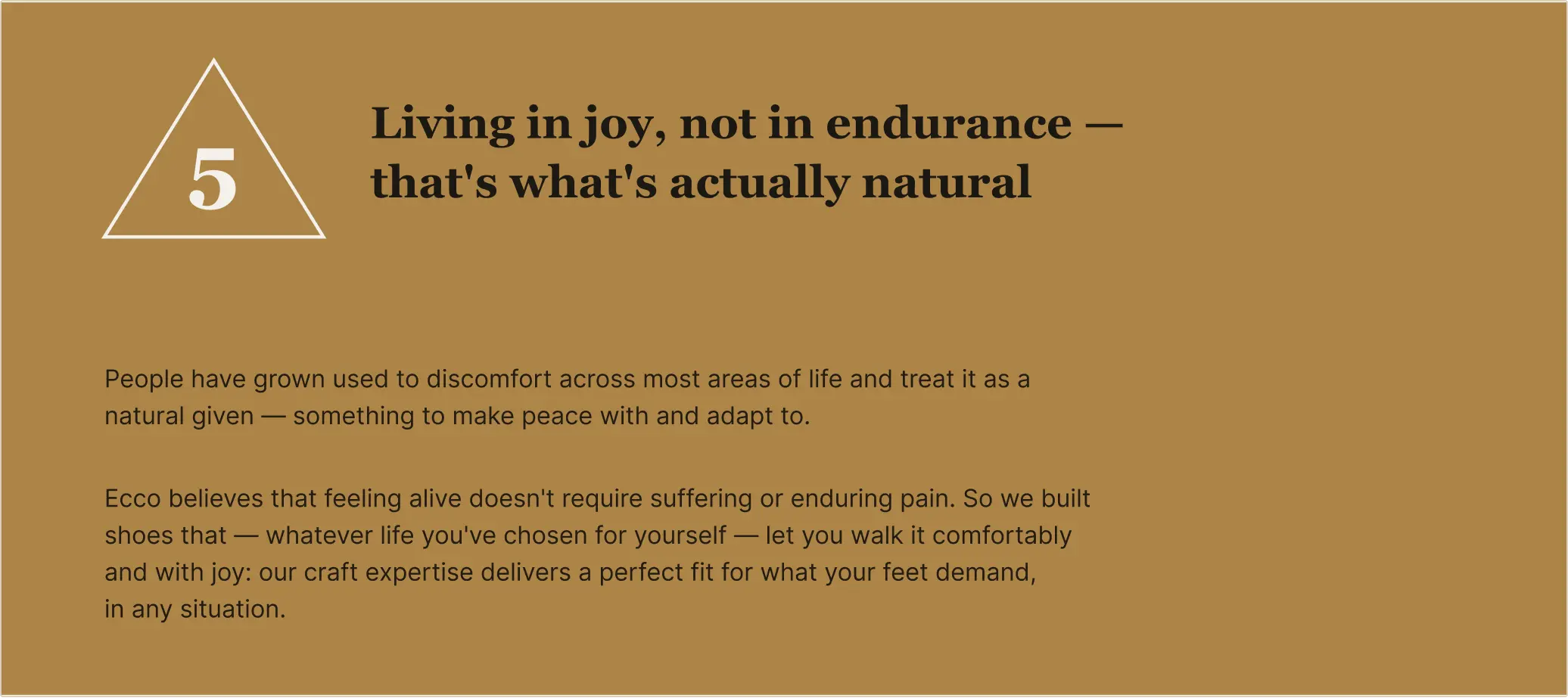
Once all concepts were written, they were mapped — clustered by the underlying meaning each one ran on. The map is how the eleven became a decision: five territories of thought, and within them the one carried forward.
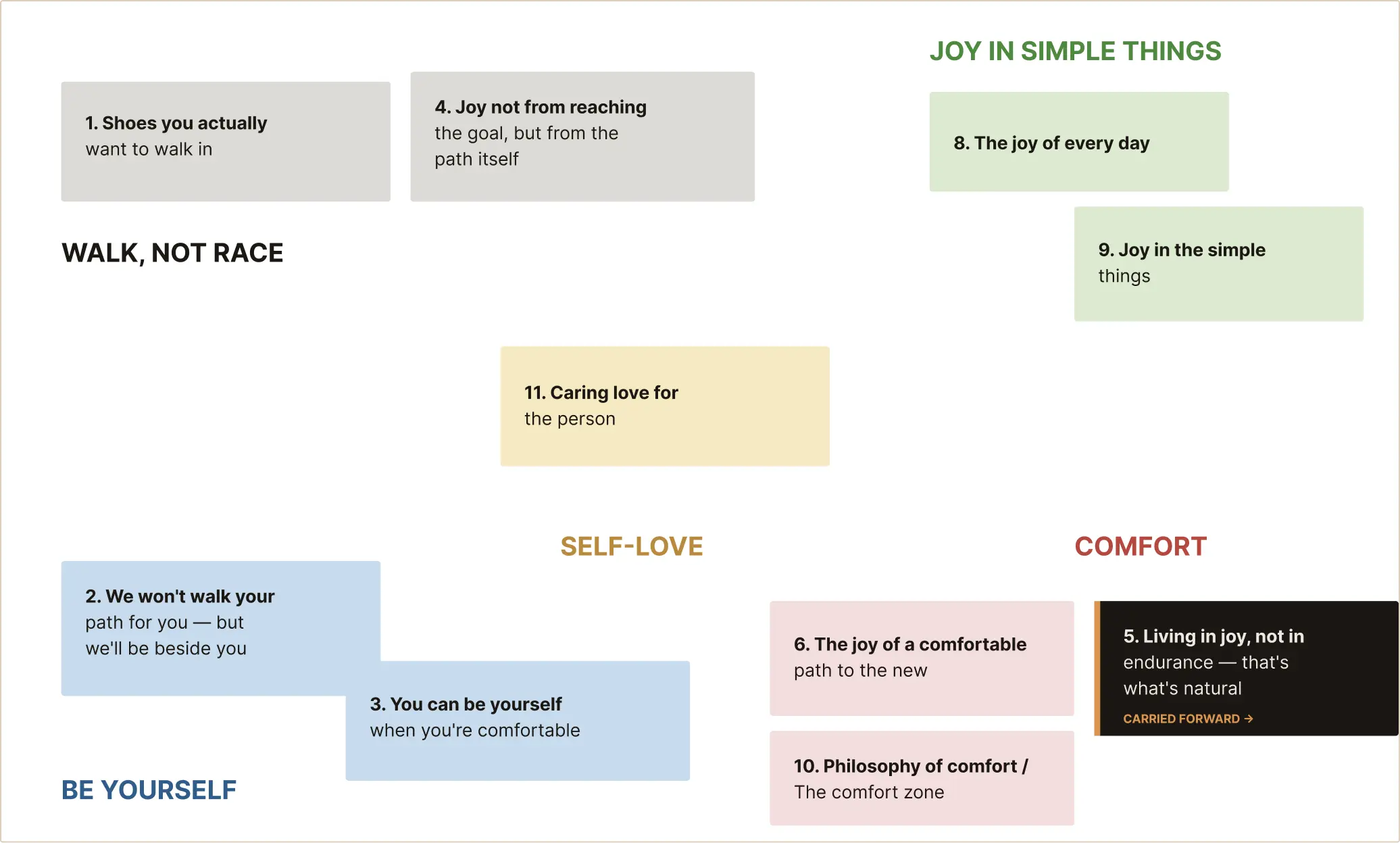
The summary statement is the discipline test: if a territory can't survive being said in a single sentence, it isn't a platform. The recommended one, held up against two alternatives.
Discomfort, normalised as the habitat you must adapt to.
The ideology of endless self-overcoming and achievement.
The stigma that brands the comfort zone a place for losers.
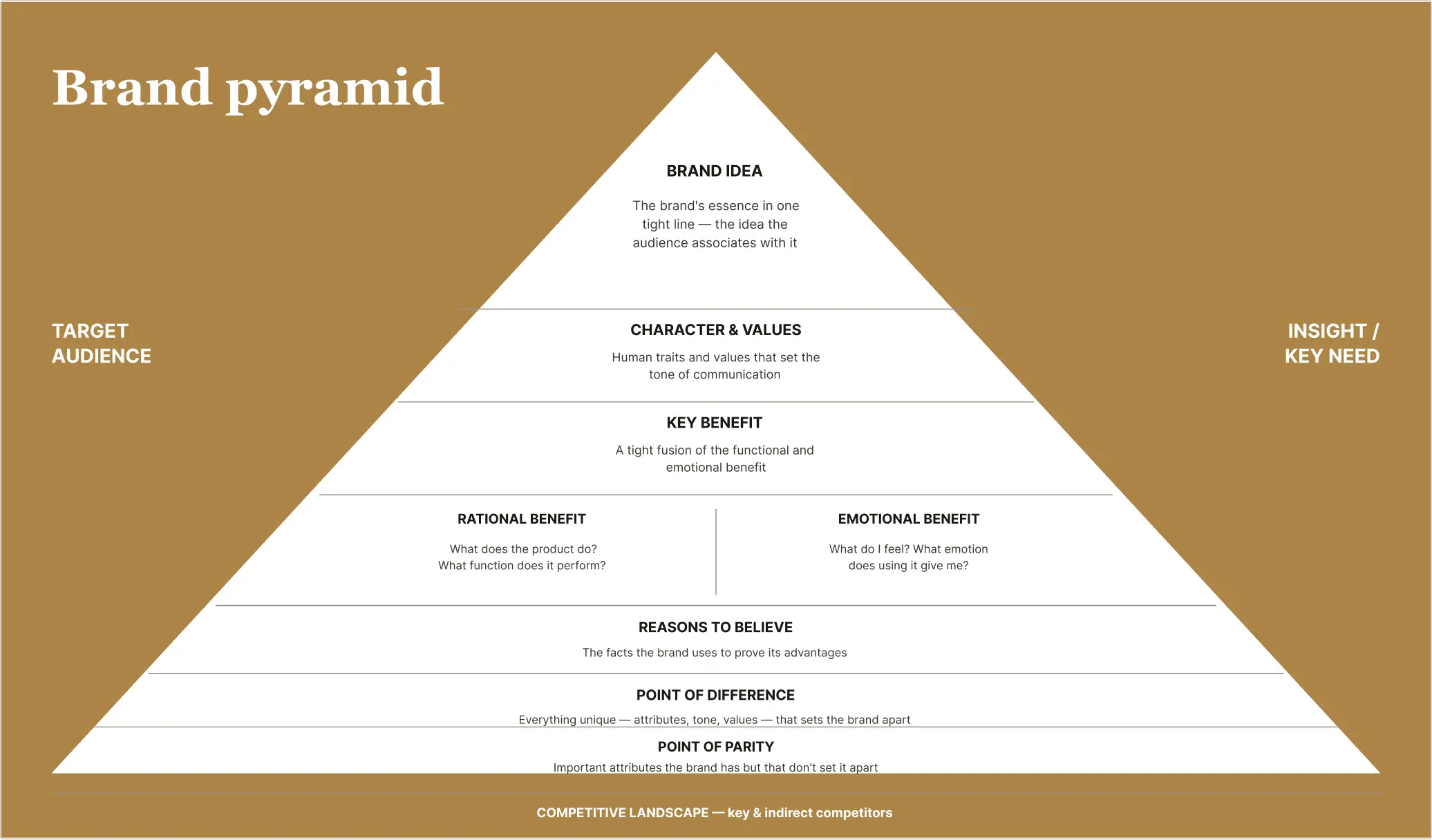
The recommended territory — “Living in joy, not in endurance” — was developed into Ecco's full positioning platform on the framework below: from competitive landscape and points of parity/difference up to the single brand idea. This was Ecco's first formed positioning in the CIS market. The populated pyramid and the platform detail are under NDA; what's shown here is the structure the work was built on.
Built the entire pre-workshop base solo: the 360° category & trend audit; the competitor audit decoding each player's positioning, communication, design and tone of voice; and the audience work — selecting the strategic target audience and writing its detailed portrait, including pains, motivations and category behaviour.
Defined who the platform had to be built for: the 25–40 self-sufficient urban segment, and surfaced the governing tension — happiness must be earned, discomfort is the habitat, the comfort zone is for losers — that the whole reframe later turned on.
Presented the category and competitor analysis directly to Ecco's leadership, marketing and sales stakeholders inside the two-day workshop, framing the strategic problem the platform had to solve.
Synthesised the raw observations and facts from the cross-functional sessions into clustered insight platforms, and shaped them toward positioning concepts — working within the agency team under the strategic director.
Assessed the full territory landscape against enemy sharpness, ownability and scale to arrive at the recommended platform — the strategist's call on which direction Ecco should carry forward.
I'm always open to new projects and interesting conversations.